Pantry guide
Chinese Chili Oil: Choosing Heat, Solids and Seasoning
Chili oil can be mostly infused oil or a mixture containing chili flakes and other solids. Chili crisp adds a more pronounced crunchy component. Choose the texture and seasoning your dish needs, then measure both the oil and solids rather than treating every jar as equivalent.
Decide whether you want oil, chili solids or crunch
A clear red oil can distribute chili flavor without much texture. A mixture with chili flakes contributes solids as well as oil. Products described as chili crisp can include crisp garlic or other ingredients, changing both the bite and the flavor. These are useful options, but not automatic equal-volume replacements.
If a noodle dressing calls for chili oil with sediment, skimming only the oil gives a different result. If the dish needs a light finishing oil, spooning a large quantity of crunchy solids may overwhelm it. Read the recipe’s description before measuring.
Check for salt and ingredients beyond chili
Commercial products may contain soy sauce, fermented beans, sesame, peanuts, mushrooms or garlic. For example, Lee Kum Kee Chiu Chow Chili Crisp Oil lists soybean oil, garlic, chili ingredients, soy sauce containing wheat, sesame oil and seasonings; its product page declares soybeans, wheat and sesame. That is one specific product, not a formula for all chili oils.
A red jar is not automatically vegan, wheat-free or suitable for a sesame or peanut restriction. Read the complete ingredients and assess the rest of the meal. If the oil already includes salty ingredients, account for those before adding more soy sauce or salt to the dish.
Add it where the texture will be useful
For cold noodles or a dip, mixing a measured amount in the sauce bowl lets you distribute the heat. For a tofu dish, the recipe may include chili oil in the sauce or at the finish. Optional finishing oil at the table lets diners choose how much extra heat they want.
Do not use a jar containing fragile crisp solids as if it were unlimited neutral frying oil. Follow the recipe’s addition stage and control heat so the solids do not scorch. More sauce does not remove a burnt garlic flavor. For the initial pan oil, use the cooking oil specified by the recipe.
Keep chili heat separate from Sichuan pepper
Chili and Sichuan pepper contribute different sensations. A dish can be fiery without being numbing, or numbing without a large quantity of added chili oil. Check whether the recipe uses both before adjusting only the red oil.
Start with the measured recipe amount and hold back optional extra oil when the jar is unfamiliar. Assess the safely cooked dish or a ready-to-eat dipping sauce, then offer more separately. That gives you control without diluting the entire dish after every diner’s preference has been mixed into it.
Choose a replacement that suits the dish
A chili sauce may provide heat but also water, vinegar, sugar or salt. Dry chili flakes provide solids and heat without reproducing an infused oil. A different chili crisp adds its own texture and seasoning. Review the sauce’s liquid and salty ingredients when making those changes.
If the chili oil is an optional finish, omitting it can be the most straightforward choice for a less spicy meal. If it is central to a cold-noodle dressing, use a suitable product or a recipe designed for your available condiment. There is no universal conversion based on redness alone.
Use the product’s storage directions
Reseal the jar and follow its instructions after opening, including refrigeration when required. Use a clean utensil and keep the label for later ingredient checks. Do not taste suspicious oil to decide whether it is safe.
For a homemade chili oil, follow the specific recipe’s ingredient and food-storage guidance. A commercial bottle’s storage instructions do not establish the shelf life of a different homemade mixture. This ingredient guide supplies no room-temperature storage procedure for homemade oils.
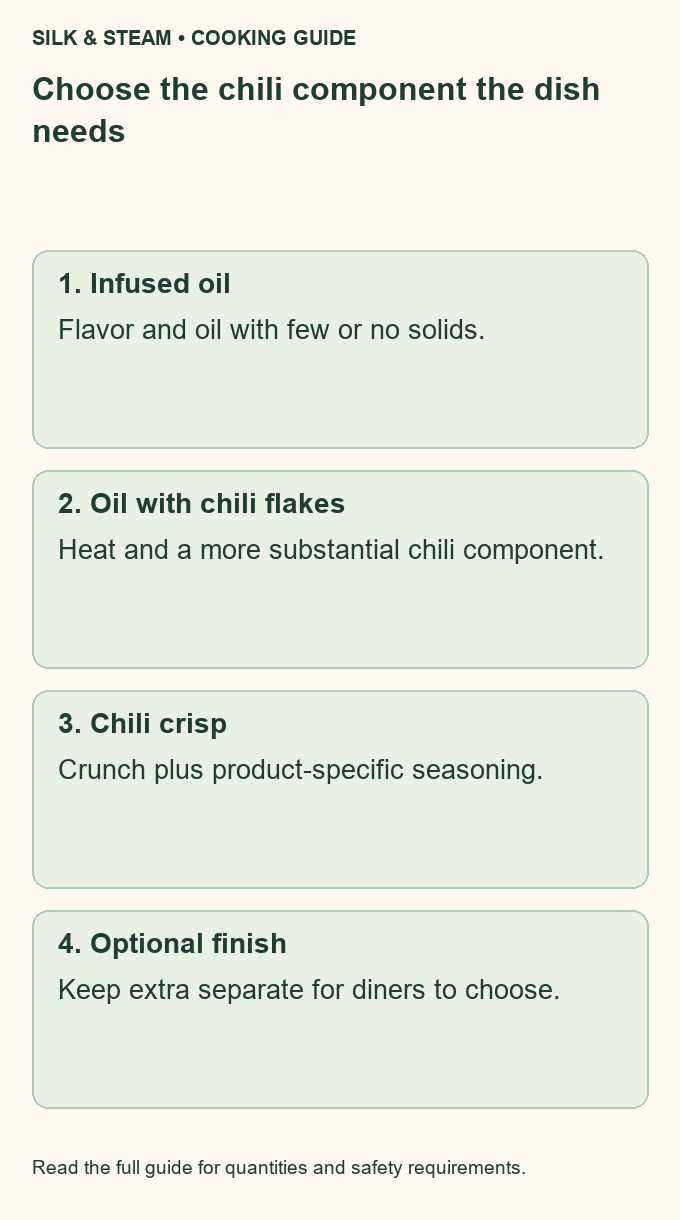
Choose the chili component the dish needs
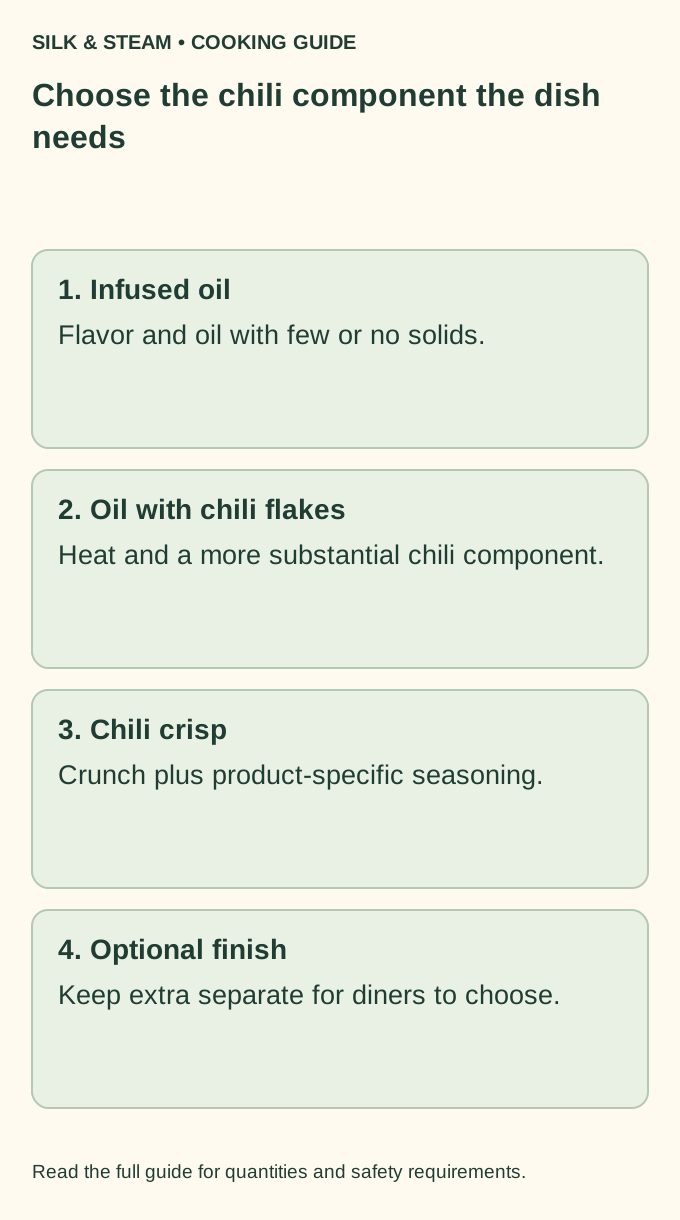
- Infused oil
Flavor and oil with few or no solids. - Oil with chili flakes
Heat and a more substantial chili component. - Chili crisp
Crunch plus product-specific seasoning. - Optional finish
Keep extra separate for diners to choose.
Chili condiment choice record
Use the measured recipe as the starting point. Redness and jar size do not give a reliable heat conversion.
| Dish | ________________________ |
|---|---|
| Exact chili product | ________________________ |
| Oil-only, flakes or crisp solids | ________________________ |
| Complete ingredient and dietary check | ________________________ |
| Other salty ingredients | ________________________ |
| Recipe amount | ________________________ |
| Oil and solids used | ________________________ |
| Addition stage | ________________________ |
| Optional amount kept for the table | ________________________ |
| Storage instructions | ________________________ |
Questions
Are chili oil and chili crisp the same?
They can overlap, but crisp products generally emphasize crunchy solids. Check what the recipe needs and what is actually in the jar.
Is chili oil always gluten-free?
No. Some products contain soy sauce with wheat or other ingredients that matter. Check the exact product and the complete meal.
Why did extra chili oil make the dish salty?
The product may also contain salty condiments or seasonings. Chili heat, oil and salt do not vary independently in every jar.
Can I omit it?
If it is an optional finish, usually you can expect a less spicy result. If it is central to the sauce, choose a suitable alternative recipe or condiment and reassess the liquid and seasoning.