Pantry guide
Chinese Light Soy Sauce: Choosing and Adjusting Seasoning
Chinese light soy sauce is an everyday seasoning sauce. “Light” describes its style relative to Chinese dark soy sauce; it does not mean low sodium. Choose the bottle for flavor and dietary suitability, then measure it alongside the other salty ingredients in your dish.
Read “light” as a sauce style
Chinese light soy sauce, sheng chou (生抽), is used in marinades, stir-fries, dipping sauces and noodle dishes. Compared with Chinese dark soy sauce, it generally contributes less dark color. A recipe that asks for Chinese light soy is asking for this seasoning style, even if the front of a particular bottle says only “soy sauce.”
Japanese light soy, Chinese light soy and reduced-sodium soy sauce are different descriptions. Country or culinary style tells you what product you are buying; “reduced sodium” describes a salt comparison. Do not infer one from the other. Read the back label when the front is ambiguous.
Check the exact bottle before choosing a substitute
Look at the product name, ingredients, serving size and storage instructions. For example, Lee Kum Kee Premium Soy Sauce lists soybeans and wheat flour, and declares soybeans and wheat. That is a useful example of why a fermented soybean sauce can also contain wheat. It does not establish the recipe for every bottle on the shelf.
A suitable gluten-free-labeled soy sauce or tamari may replace light soy in a dish where the seasoning role matters more than matching one brand. Tamari is not automatically gluten-free. Check the exact product, then check doubanjiang, stock, noodles and other sauces too. If avoiding soy itself, a soy-based tamari does not solve that problem; choose a condiment suitable for that requirement and expect a different flavor.
Measure all the salty additions together
Before heating the pan, write down the light soy sauce, oyster or mushroom sauce, fermented bean paste and stock. Their contributions accumulate. A small amount of light soy can be enough in a strongly seasoned bean-paste sauce, whereas a lightly seasoned vegetable dish may depend on it more.
Follow the measured formula for the dish first. If substituting a different bottle or adding a salty paste, hold back an optional finishing splash. Taste only after any raw meat, seafood or eggs have been safely cooked. Add small measured amounts to the finished sauce rather than pouring directly from the bottle. Darker color is not a reliable measure of saltiness.
Choose the addition point for the dish
For a tofu glaze, combine the soy sauce with the recipe’s liquid and other seasonings before it enters the pan. For a dipping sauce, mix it in a separate bowl so you can assess vinegar and heat without changing the main dish. In noodle dishes, account for how much sauce the noodles absorb.
Avoid leaving a tiny puddle of sauce to burn in an empty hot pan. Add it at the recipe’s sauce stage, with the stated liquid or ingredients, and reduce heat when necessary. Adding more soy to disguise scorched garlic usually gives you a dish that is both bitter and saltier.
If the finished dish is too salty
Stop adding seasoning. If the dish’s texture permits, increase the unsalted main ingredient or serving base, such as plain rice alongside a strongly seasoned tofu dish. Adding water can loosen a sauce, but boiling that water away concentrates the original seasoning again. Sugar or vinegar changes balance; neither removes salt.
For the next attempt, record the bottle and the amount that went into the whole dish. Change one salty ingredient at a time. That gives you a useful repeatable adjustment instead of an extra collection of unmeasured splashes.
Store the sauce according to its label
Close the cap, keep the neck clean and follow the manufacturer’s directions for storage after opening. Mark the opening date if that helps you keep track. General pantry advice does not override a bottle that instructs refrigeration. Do not taste a product with suspected spoilage to decide whether it is safe.
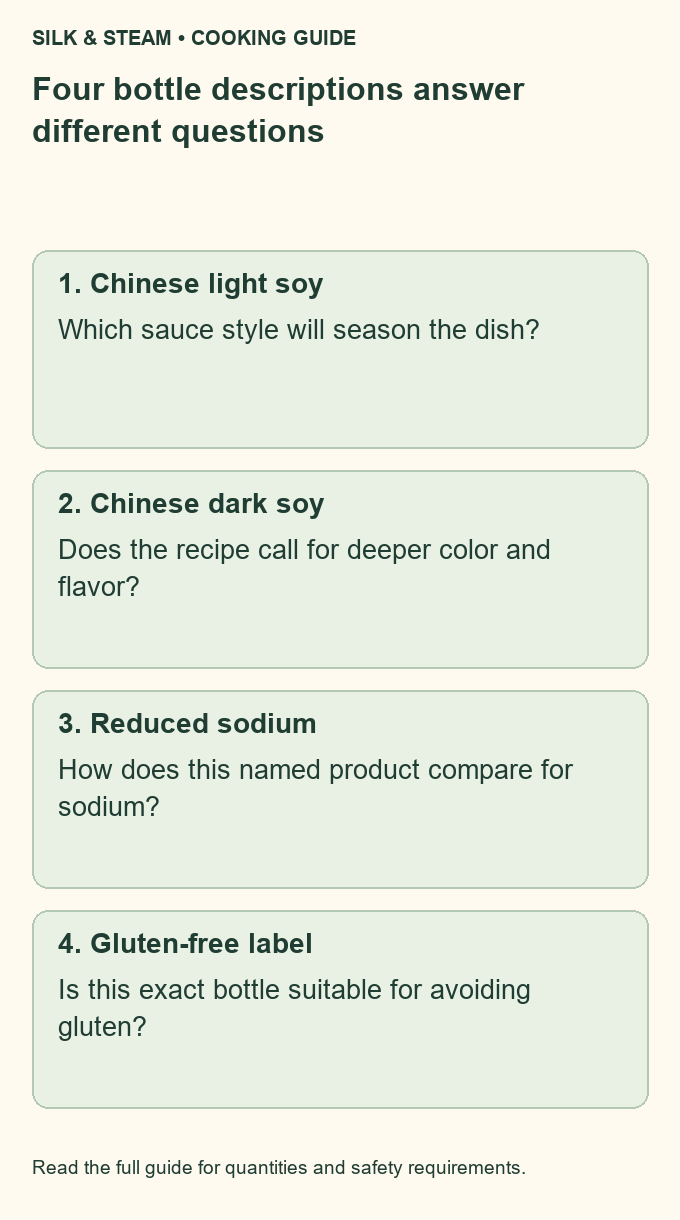
Four bottle descriptions answer different questions
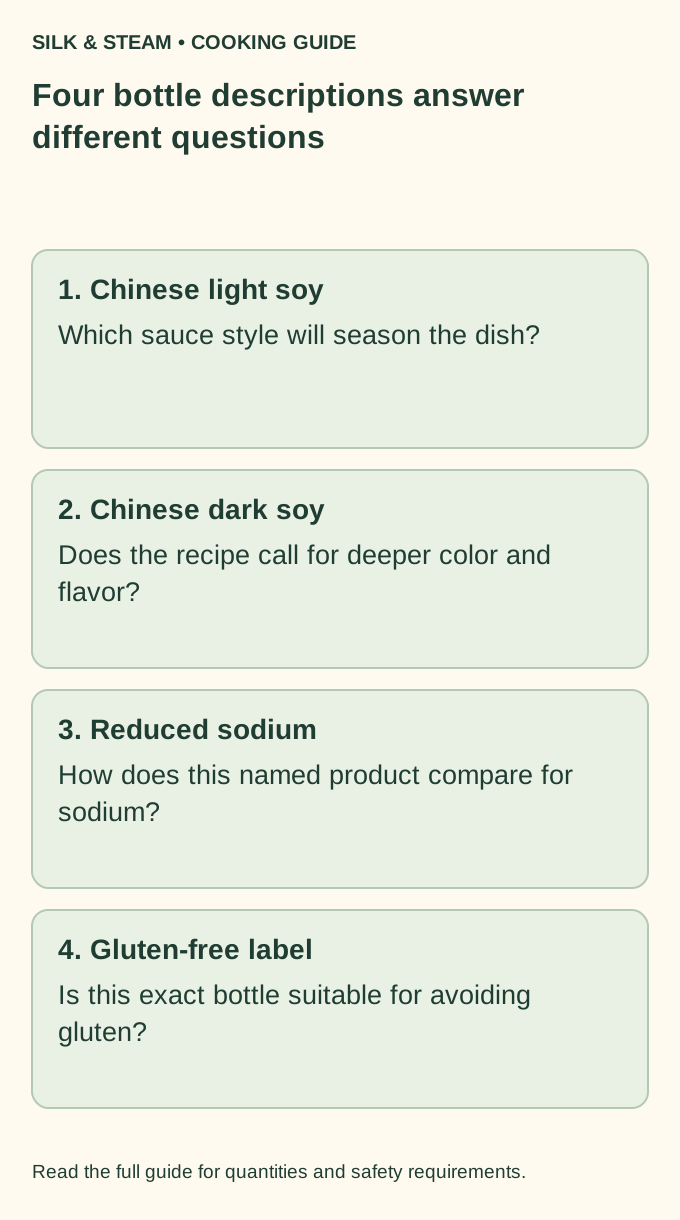
- Chinese light soy
Which sauce style will season the dish? - Chinese dark soy
Does the recipe call for deeper color and flavor? - Reduced sodium
How does this named product compare for sodium? - Gluten-free label
Is this exact bottle suitable for avoiding gluten?
One-dish soy seasoning record
Record amounts for the whole dish. Use the recipe’s formula as the starting point; this record does not set a sodium target or certify an allergen-free meal.
| Dish and portion count | ________________________ |
|---|---|
| Exact soy sauce product | ________________________ |
| Light soy amount | ________________________ |
| Other salty sauces or pastes and amounts | ________________________ |
| Stock: unsalted or seasoned | ________________________ |
| Initial amount held back | ________________________ |
| Adjustment after safe cooking | ________________________ |
| What to change next time | ________________________ |
Questions
Does light soy sauce mean low sodium?
No. Chinese light soy is a sauce style. Use the nutrition label and a product explicitly identified as reduced sodium for a sodium comparison.
Can I use Japanese all-purpose soy sauce?
It can season a home dish, but expect a different flavor from the Chinese light soy requested. Start with the recipe amount and hold back optional finishing sauce when the bottle is unfamiliar.
Can dark soy replace all the light soy?
Usually that changes both color and flavor substantially. If light soy is missing, choose a suitable everyday seasoning sauce; do not add large amounts of dark soy just to fill the same volume.
Do soy sauce and stock both count toward seasoning?
Yes. Seasoned stock, bean pastes, oyster sauce and soy sauce all contribute to the final dish. Assess them together before adding extra salt.