Pantry guide
Chinese Dark Soy Sauce: Color, Flavor and Substitutes
Chinese dark soy sauce, lao chou (老抽), adds deep color and flavor in small amounts. It is still a salty sauce. Choose it when the recipe needs that role, and keep the light soy, stock and other seasonings in view before adding more.
Know what dark soy is doing in the recipe
Chinese dark soy is generally darker, thicker and somewhat sweeter than Chinese light soy. It is often used with light soy rather than instead of it: one helps set the seasoning, while the other deepens color and contributes its own flavor. This is a useful cooking distinction, not a claim that dark soy contains no salt.
A dark-brown noodle coating is a reason to check the recipe’s color ingredient, not a reason to keep adding every soy sauce you own. Products vary. Read the exact recipe and bottle rather than using color as a universal dosing scale.
Distinguish plain dark soy from related products
Mushroom-flavored dark soy is dark soy with mushroom flavor. It may be a suitable choice in a braise or noodle sauce, but its seasoning profile depends on the product. Double-black and sweet soy sauces can bring different levels of sweetness and thickness. Japanese dark soy is also a different style from Chinese dark soy.
For a concrete label example, Lee Kum Kee Premium Dark Soy Sauce lists water, salt, caramel color, sugar, soybeans and wheat. Soybeans and wheat are declared allergens on that product page. Check your own bottle; a dark-looking sauce is not automatically wheat-free or interchangeable with another dark-looking sauce.
Use the stated amount, then assess the whole sauce
Measure dark soy into the sauce bowl before cooking. A recipe may call for only a teaspoon for color. Combine it with the stated water or stock, light soy and other sauces so you can see everything being added. When the sauce coats the food, stop to assess rather than pouring extra sauce into a hot pan.
In a braise, reduction changes concentration. If you add dark soy repeatedly while reducing, the dish may become much stronger than it looked at the beginning. Cook the main ingredient to its required doneness and texture; then adjust a safely cooked sauce in small measured additions.
Choose a substitute by the feature you can give up
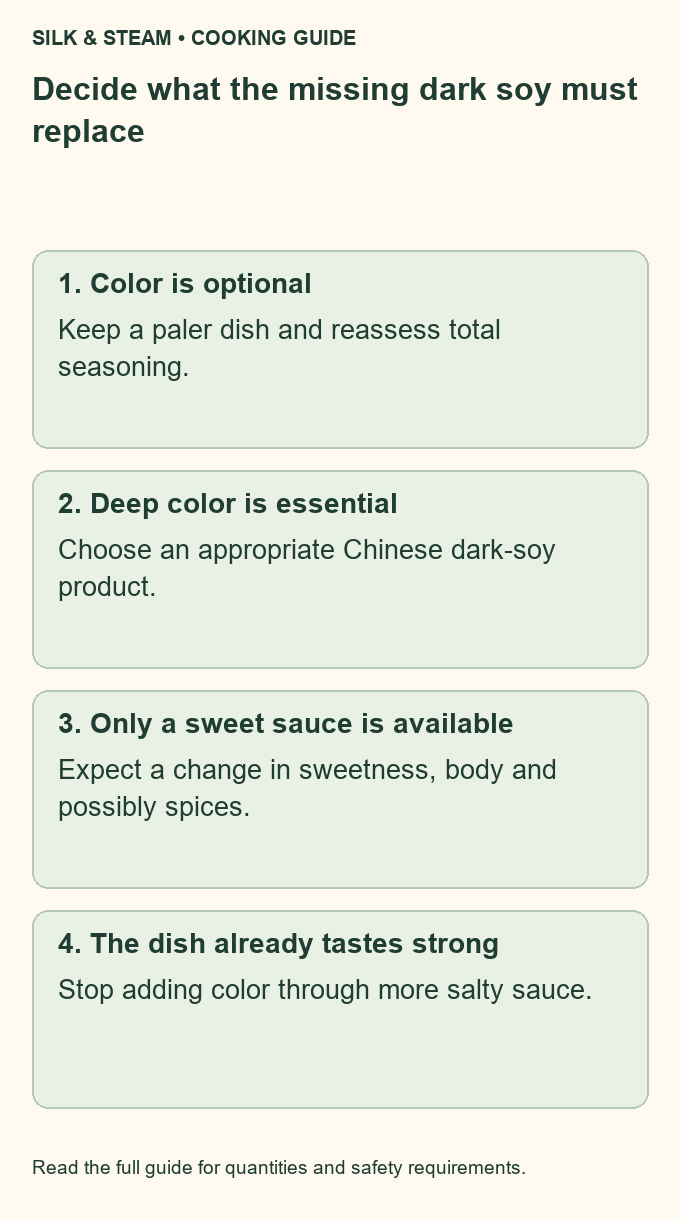
If color is optional, a suitable light soy can supply seasoning while leaving a paler dish. Do not automatically replace the missing dark soy with a full equal volume of light soy on top of what the recipe already contains. Review the total seasoning first.
If matching the deep color is central, buy Chinese dark soy or use an appropriate labeled dark-soy product. Hoisin, sweet soy, balsamic glaze and molasses change more than color. They can add pronounced sweetness, spices, acidity or thickness. They are recipe changes, not invisible replacements. A pale but balanced tofu sauce is preferable to pursuing a photograph’s color with unmeasured additions.
Diagnose a sauce that becomes too dark or heavy
Too much sauce can obscure the vegetable or tofu flavor even when the dish is not visibly burnt. Stop adding more, and decide whether the recipe can accommodate an unsalted ingredient or liquid without losing its intended texture. Simply simmering added water away returns you toward the original concentration.
For next time, record the dark-soy product and initial measure. If changing brands, hold back any optional extra color adjustment. Keep that change separate from changes to sugar, stock or light soy so you can tell what made the difference.
Keep bottle care simple and specific
Follow the bottle’s opening and storage directions, close it after measuring and keep the neck clean. If the product requires refrigeration, follow that instruction. Do not taste suspicious sauce as a safety check. Store the product where you can find its ingredient and storage labels again, rather than decanting into an unidentified container.
Decide what the missing dark soy must replace
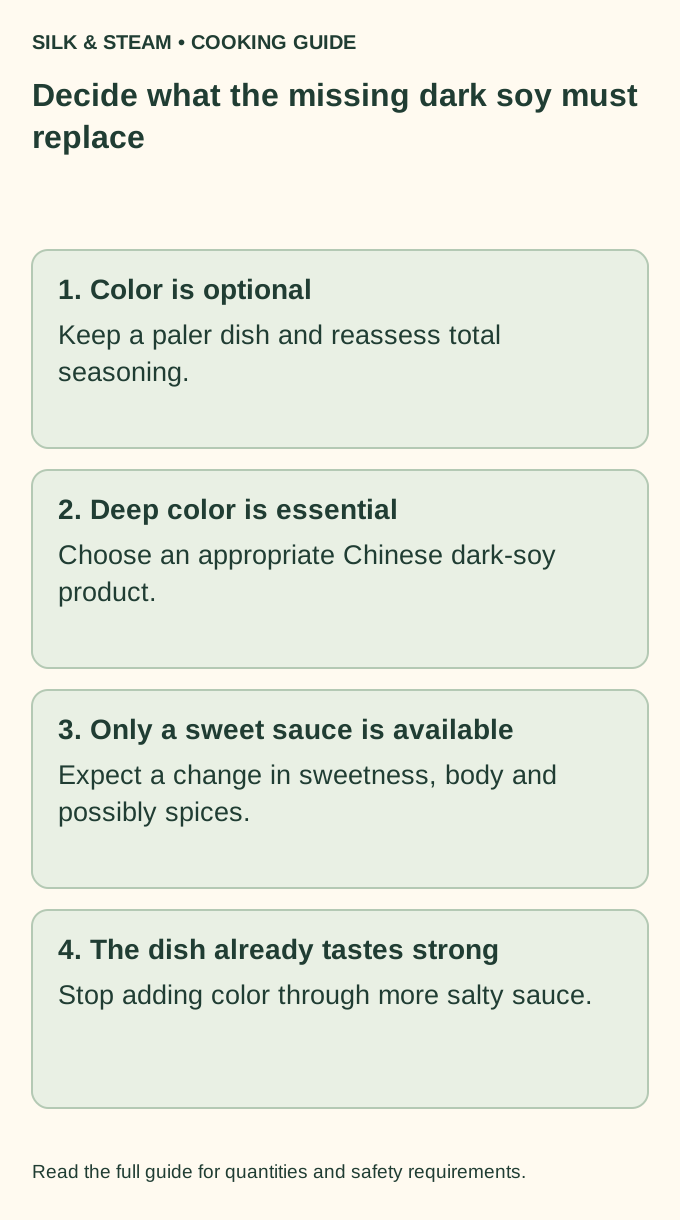
- Color is optional
Keep a paler dish and reassess total seasoning. - Deep color is essential
Choose an appropriate Chinese dark-soy product. - Only a sweet sauce is available
Expect a change in sweetness, body and possibly spices. - The dish already tastes strong
Stop adding color through more salty sauce.
Dark-soy adjustment record
Record measured additions, not a target photograph color. Assess flavor only after all ingredients requiring cooking are safely cooked.
| Dish | ________________________ |
|---|---|
| Role: color, flavor, or both | ________________________ |
| Exact dark-soy product | ________________________ |
| Recipe amount | ________________________ |
| Other soy or salty sauces | ________________________ |
| Color after coating the food | ________________________ |
| Was an extra addition needed? | ________________________ |
| Amount to try next time | ________________________ |
Questions
Is mushroom dark soy stronger than regular dark soy?
It has added mushroom flavor, but strength varies by product. Read the label and measure it; do not assume a fixed conversion or ranking.
Is Japanese dark soy the same thing?
No. Japanese and Chinese sauce names describe different styles. For the role described here, look for Chinese dark soy or lao chou.
Why did my noodles turn very dark before tasting seasoned?
Color and seasoning are separate cues. Dark soy can color food strongly; assess the complete sauce instead of adding more for appearance alone.
Can I leave dark soy out?
Sometimes, especially when it is a small optional color addition. Expect a paler result, and use the remaining measured ingredients rather than replacing it automatically with another salty sauce.