Pantry guide
Dried Shiitake Mushrooms: Soaking, Stems and Cooking
Dried shiitake mushrooms bring a concentrated savory mushroom flavor to soups, braises and sauces. They need hydration and cooking before serving. Follow the packet’s soaking instructions, check the texture, trim tough stems and keep any gritty sediment out of the pan.
Choose dried shiitake for its flavor and format
Dried shiitake mushrooms, xiang gu (香菇), are different from a fresh mushroom sold by the same name. Drying concentrates their character, and hydration changes their weight and volume. A spoonful of chopped dry pieces is not a reliable equivalent to a spoonful of hydrated mushrooms.
Use the form and amount specified by the recipe. If a sauce calls for fresh mushrooms, replacing them with dried ones also introduces a soaking step and a more pronounced flavor. Choose a recipe that gives a dried-mushroom quantity when you want a predictable starting point.
Plan the soaking step before turning on the stove
Inspect the labeled food product and follow its hydration directions. Use a clean bowl and enough water for the mushrooms to hydrate; a small clean plate can help keep floating caps submerged. Check for a pliable cap and a hydrated center rather than assuming every size is ready at the same time.
For a longer soak, use the refrigerator rather than leaving hydrated mushrooms at room temperature overnight. Do not treat a general culinary suggestion to “soak overnight” as a food-safety instruction. Keep the packet’s directions, cold-storage requirements and your cooking schedule together.
Trim, inspect and cut after hydration
Lift the mushrooms out of the soaking water so sediment stays behind. If dirt remains on the mushrooms, rinse it away. Gently squeeze excess liquid when the recipe needs relatively dry pieces, such as a filling or a stir-fry.
Trim the tough stems before slicing the caps. Stem texture can differ from the soft cap, and a chewy piece will remain noticeable in a smooth sauce. Slice or chop to match the dish: larger slices suit a braise, while small pieces distribute mushroom flavor through a tofu sauce or filling.
Decide whether the soaking liquid belongs in the recipe
Mushroom soaking liquid can contribute flavor to a cooked soup or braise. Lift out the mushrooms, let any sediment settle and strain the liquid through a suitable fine filter. Avoid pouring gritty residue from the bottom into the dish.
Use that liquid as part of the recipe’s measured cooking liquid, not as an unlimited extra. In a small stir-fry sauce, too much liquid can soften the vegetables and dilute the seasoning. Hydration liquid is not a finished ready-to-drink broth; cook it as part of the dish, and do not use liquid from a suspicious product.
Add mushrooms according to the cooking method
Have hydrated, trimmed and cut mushrooms ready before a quick stir-fry begins. Pat away excess surface moisture if the recipe depends on browning. For a braise or soup, follow the stated simmering method so the mushroom texture and flavor can develop in the liquid.
Do not use hydrated dried shiitake as an automatic replacement for every fresh-mushroom quantity. If you adapt a recipe, note the dry amount, hydrated amount and liquid you added. Keep soy sauce, bean paste and other seasonings measured separately so the mushroom substitution does not lead to repeated untracked additions.
Store the dry product and hydrated food differently
Keep unused dry mushrooms closed, dry and away from heat, following the label. Once water has been added, treat them as hydrated food and keep them refrigerated if cooking is delayed. The dry packet’s storage instructions do not establish how long a soaked batch can sit out.
Use clean utensils and keep raw meat or seafood away from the soaking bowl and prepared mushrooms. Refrigerate cooked leftovers promptly in shallow containers. Do not taste suspicious mushrooms or soaking liquid to decide whether they are safe.
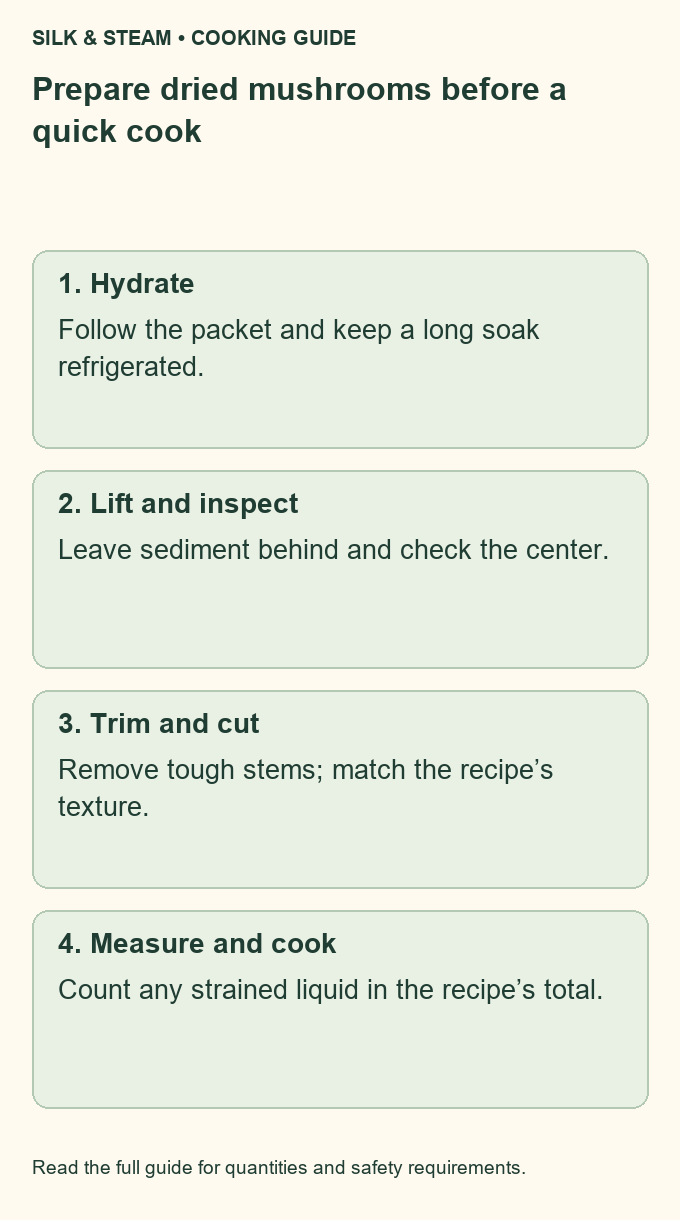
Prepare dried mushrooms before a quick cook
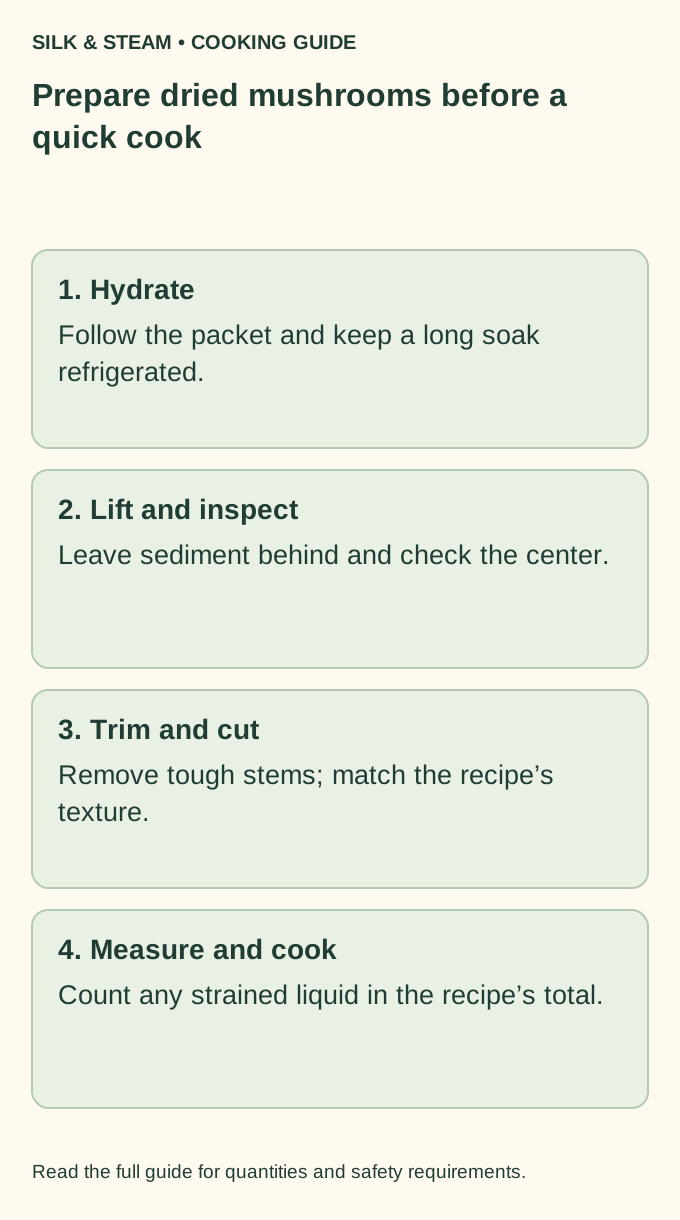
- Hydrate
Follow the packet and keep a long soak refrigerated. - Lift and inspect
Leave sediment behind and check the center. - Trim and cut
Remove tough stems; match the recipe’s texture. - Measure and cook
Count any strained liquid in the recipe’s total.
Dried mushroom preparation record
Keep the recipe quantity and the packet’s hydration directions together. Record added liquid; do not use this sheet to invent a room-temperature overnight soaking allowance.
| Dish and recipe | ________________________ |
|---|---|
| Exact mushroom product | ________________________ |
| Recipe dry quantity | ________________________ |
| Packet hydration directions | ________________________ |
| Soak start and refrigeration plan | ________________________ |
| Hydrated center checked | ________________________ |
| Tough stems removed | ________________________ |
| Cut size | ________________________ |
| Strained soaking liquid used and amount | ________________________ |
| Cooking method | ________________________ |
Questions
Can dried shiitake replace fresh mushrooms by volume?
Their strength, moisture and volume differ. Use a recipe that specifies dried mushrooms, or record an adaptation rather than relying on an equal-volume swap.
Why are the mushrooms still chewy?
The center may not be fully hydrated, or a tough stem may remain. Check preparation before blaming the sauce; follow the product directions and recipe cooking method.
Should I throw away all the soaking liquid?
A cooked soup or braise may use strained liquid for flavor. Leave sediment behind, count it in the measured liquid and omit it when the recipe does not need it.
Can I soak them on the counter overnight?
Use a refrigerated longer soak and follow the packet. An unspecified overnight culinary instruction does not establish a safe room-temperature holding period.