Pantry guide
Fermented Black Beans: Douchi, Preparation and Sauce
Fermented black beans, douchi (豆豉), are salted fermented black soybeans used as a seasoning. They are different from ordinary cooked black beans and from a bottled black-bean sauce. Choose the form your recipe specifies, measure it and account for the salt already present.
Identify the ingredient before choosing a substitute
Douchi are fermented black soybeans with a concentrated salty, savory flavor. Packets or jars contain individual beans; their surface and softness can vary by product. The words “black beans” on an unrelated canned bean label do not identify the same seasoning.
Ordinary canned or dried black beans cannot reproduce this fermented condiment. A prepared black-bean sauce is a separate product, often with other seasonings and liquid. Read the full label and the recipe before deciding which format belongs in the dish.
Prepare the measured amount the recipe calls for
Set aside the recipe quantity before cooking. Some recipes briefly rinse the beans to remove excess surface salt; others use them without rinsing. Follow the recipe and packet instead of assuming every product needs a long soak.
Drain well if rinsing is specified, especially before adding them to hot oil. Chop when the recipe wants an evenly distributed flavor, or keep some whole when distinct small pieces are intended. Do not add an unmeasured handful simply because the beans look like a main-course legume.
Combine them with aromatics without scorching
Douchi often join garlic, ginger or other aromatics in the pan before the main sauce liquid is added. Have all measured ingredients ready for that stage. Keep heat controlled so the aromatics and beans do not burn while you prepare the next ingredient.
Use the dish’s specified order. A quick stir-fry and a longer braise use liquid and timing differently, so a general instruction to fry the beans cannot replace the recipe. If the pan becomes dry or too hot, manage the heat rather than adding another untracked spoonful of sauce.
Track salt from the whole seasoning mixture
Fermented beans can contribute substantial salt, and a sauce may also contain soy sauce, stock or a prepared condiment. Measure those separately. If the recipe leaves a final seasoning adjustment, assess the cooked dish before adding more.
Rinsing can change surface salt but does not make an unknown product sodium-free. Dark color does not establish salt content either. Use the exact product’s nutrition label when sodium information matters, and record the beans and other salty ingredients together.
Treat bottled black-bean sauce as an adaptation
A prepared sauce can provide a related flavor direction when a recipe allows it, but it may contain garlic, sugar, soy sauce, oil, thickeners or other ingredients. Its spoon volume is not a universal conversion for individual douchi.
For an adaptation, check the sauce label, reduce overlapping seasonings only as the recipe allows and record the actual amount. Soybean allergy matters for douchi. Wheat and other ingredients may also matter in a prepared sauce, so do not infer gluten-free or vegan suitability from the product name alone.
Keep the label and use clean utensils
Follow the exact product’s storage and after-opening instructions. Close the container and avoid introducing water, raw-food juices or a used tasting spoon. Keep the label when transferring a small cooking portion to another container.
A general culinary claim that fermented beans last for years is not a storage guarantee for your packet. Discard a product that is suspect according to its condition and instructions; do not taste it as a safety test. A cooked dish containing douchi still needs normal prompt refrigeration of leftovers.
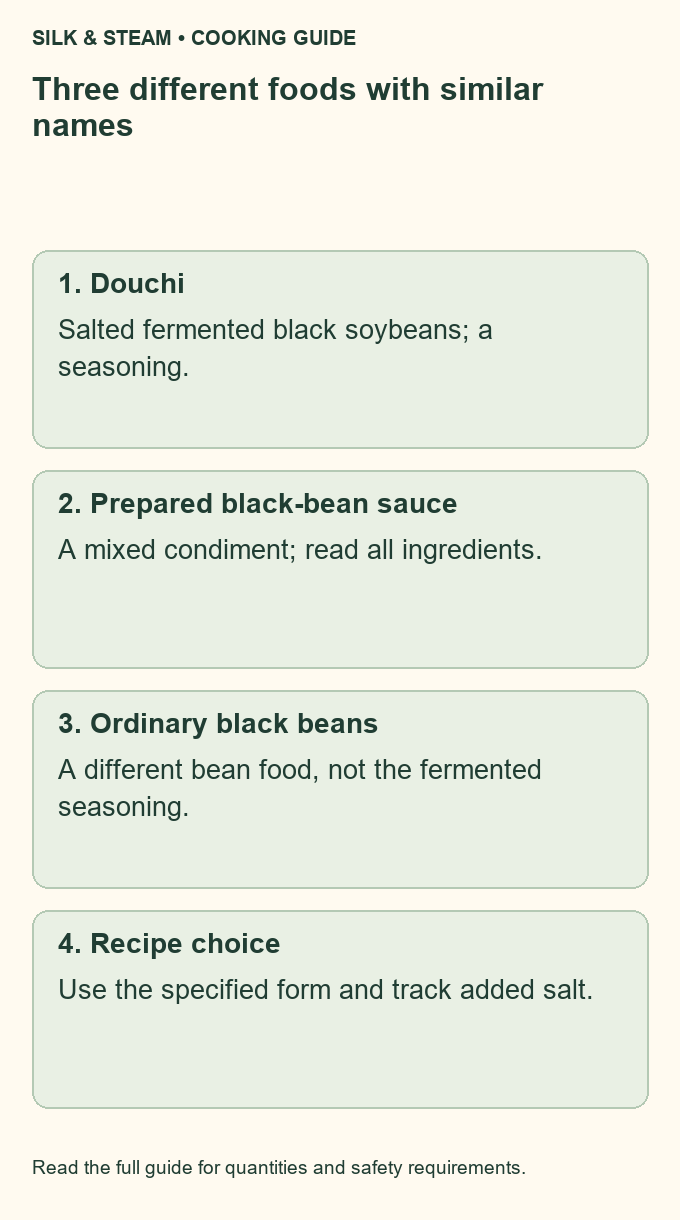
Three different foods with similar names
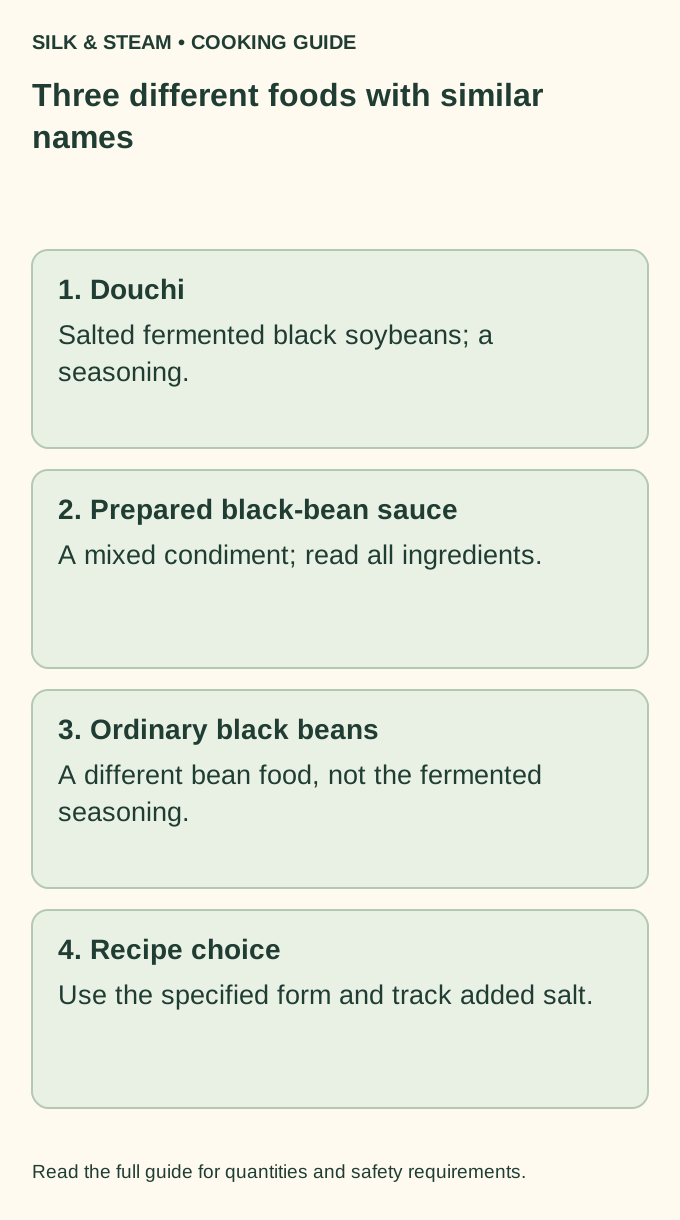
- Douchi
Salted fermented black soybeans; a seasoning. - Prepared black-bean sauce
A mixed condiment; read all ingredients. - Ordinary black beans
A different bean food, not the fermented seasoning. - Recipe choice
Use the specified form and track added salt.
Douchi and prepared-sauce record
Record the product form and measured quantity. A prepared sauce and individual beans are not a universal spoon-for-spoon substitution.
| Dish | ________________________ |
|---|---|
| Exact product | ________________________ |
| Individual beans or prepared sauce | ________________________ |
| Ingredient and allergen checks | ________________________ |
| Recipe quantity | ________________________ |
| Rinsing specified or omitted | ________________________ |
| Chopped or whole | ________________________ |
| Other salty ingredients and amounts | ________________________ |
| Addition stage | ________________________ |
| Next batch adjustment | ________________________ |
Questions
Are these the same as canned black beans?
No. Douchi are fermented black soybeans used for seasoning. Ordinary canned black beans have a different flavor and role.
Do I always need to rinse them?
No. Follow the recipe and packet. A brief rinse is used in some dishes to manage surface salt; a long soak is not a universal preparation rule.
Can black-bean sauce replace them?
Some recipes allow a prepared-sauce adaptation, but its extra ingredients and concentration differ. There is no universal equal-spoon conversion.
Does fermentation make a cooked dish safe to leave out?
No. Keep normal cooking, cross-contamination and prompt leftover refrigeration rules. The condiment does not preserve the entire cooked meal.