Practical guide
Mala Sauce vs Chili Oil and Sichuan Pepper: Which Controls Can You Keep?
A mixed mala sauce combines chili, Sichuan pepper and other seasonings. Separate chili oil and pepper let you keep more adjustments distinct. Choose the format by the change you need, check the exact label and use a complete recipe; a hot-pot dipping use is not a supplied broth dilution ratio.
On this page
Choose which sensation to change
If a meal is too numbing but its chili heat suits you, that is a different problem from too much chili heat. Sichuan pepper and chili are separate ingredients. A mixed mala product can bring both at once, which changes how much control you keep during an adjustment.
The individual Sichuan pepper guide already explains husks, forms and the numbing component. The chili oil guide covers oil, solids and crisp. Here the question is whether a premixed sauce suits the particular adjustment you want.
Separate tube, oil and pepper ingredients
Lee Kum Kee Mala Sauce, a 90 g tube, lists salted chili, soy sauce with wheat, sugar, fermented soybean paste with wheat, Sichuan pepper powder, salt, oil, modified corn starch and other ingredients. Its product page identifies it as vegan and declares soybeans and wheat. Those statements apply to this named product.
The tube is therefore more than chili oil or ground pepper. Reducing it changes several supplied components together. Its published ingredients do not give a verified chili-to-pepper ratio, a sensory heat score or a sodium amount for a spoon. We cannot calculate an exact replacement from them.
Source details: [1].
Map the adjustable controls
On a phone, scroll inside the table. Keyboard users can focus the table region and use arrow keys.
| You want to change | Separate measured chili oil and pepper | Mixed mala tube |
|---|---|---|
| Reduce numbing while retaining chili | Adjust the pepper separately, within the complete recipe | Less tube also changes chili and other seasoning; no separate internal control |
| Reduce chili while retaining pepper aroma | Adjust the chili ingredient separately | Less tube changes pepper and other components too |
| Change oil or crunchy solids | Choose the specified oil/solid format and measure it | The tube has its own liquid, oil and body profile |
| Adjust salt independently | Review oil ingredients and other salty sauces first | Soy sauce, fermented paste and salt are already listed |
| Keep a shared meal milder | Hold optional finishing ingredients separately where the recipe permits | Choose a suitable complete method; extra tube is not a single-variable change |
Use a dipping claim within its scope
The named product page describes use in stir-fries, noodles, mapo tofu and hot-pot dipping. That establishes stated applications. It does not give a broth dilution formula for a whole hot-pot pan. A sauce served with cooked food is a different use from a soup base diluted to cook raw food.
If you need broth, select a complete broth recipe or a product with actual broth directions. Do not pour in water until a dipping sauce “looks like soup” and call that a validated hot-pot base. For a dip, follow the exact product or recipe directions, keep raw-food utensils separate and use the storage instructions for the resulting mixture, not an unopened-tube shelf-life assumption.
Source details: [1].
Plan a measured next attempt
- Write the specific problem: chili heat, numbing sensation, salt, oil, body or a combination.
- Read the complete chosen recipe and exact product labels.
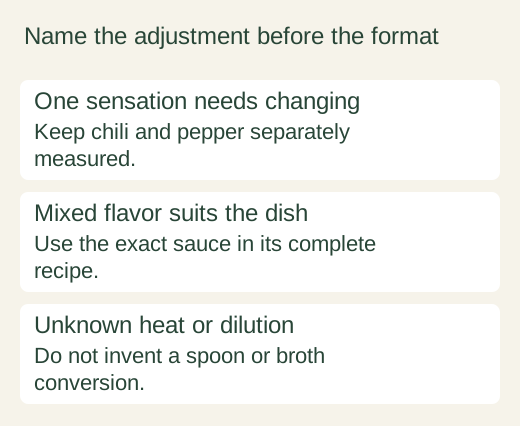
- Choose a mixed sauce method if the coupled flavor suits the dish; choose separately measured components if independent control matters.
- Keep optional finishing additions uncommitted. Do not invent a tube-to-oil or tube-to-pepper conversion.
- Assess flavor only in ready-to-eat sauce or safely cooked food, and record one measured change for next time.
For a complete component example, the mushroom mapo recipe measures chili oil and ground Sichuan pepper separately at the finish. That shows the type of control you retain. Its amounts belong to that tofu recipe, not a conversion for the mala tube.
Changing soy sauce or vinegar to disguise excessive numbness adds another flavor change; it does not subtract pepper already present. Choose a smaller serving with a suitable plain base if that works for the meal, and record the component you will change next time.
Three explained mala decisions
The cases below are constructed reasoning examples, not heat tests or tested conversions.
Case 1
The chili heat is right but numbness is too intense. Can you remove only pepper by using less of the same tube?
Show answer and explanation for case 1
No. Less mixed sauce changes several supplied ingredients together.
Choose a complete method with separately measured chili and pepper if that independent adjustment is important. The label provides no internal conversion ratio.
Case 2
The product says it suits hot-pot dipping. Does that specify how much tube to dilute into broth?
Show answer and explanation for case 2
No. A dipping application is not a broth formula.
Use actual broth directions from a complete recipe or product. The intended service, seasoning concentration and food handling differ.
Case 3
The named tube is vegan. Does that mean it meets a gluten-free requirement?
Show answer and explanation for case 3
No. Its listed bean paste and soy sauce contain wheat.
Vegan and gluten requirements are separate checks. Verify the current product and complete dish; a broad cuisine or flavor name cannot settle them.
Sources and further reading
- Lee Kum Kee USA: Mala SauceNamed US product ingredients and stated uses, checked November 11, 2026. Regional formulas and your current package can differ.
- FDA: Safe Food HandlingFood handling, safe cooking endpoints, refrigerated marinating and prompt cooling. FDA document captured November 7, 2026.