jiangnan recipe
Shanghai Cai Fan Vegetable Rice Bowl with Mushrooms, Cauliflower, Broccoli, and Light Soy
Cook the vegetables in stages, keep the sauce light, warm the rice separately, and spoon the vegetables over the rice so the grains stay fluffy.
Overview
Why this recipe works
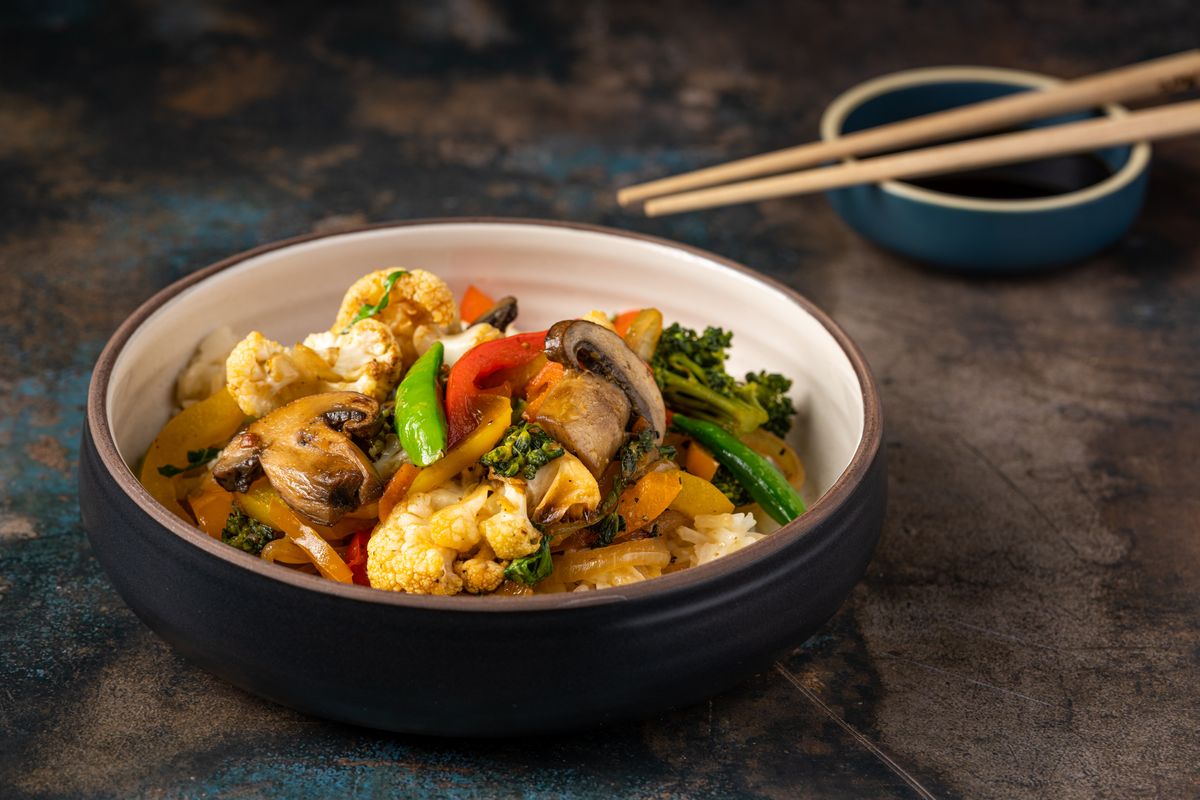
Shanghai Cai Fan Vegetable Rice Bowl is a 33-minute Jiangnan recipe built around rice and stir fry. This page is rewritten around the exact vegetable rice bowl image and made more specific than the old generic fried-rice draft. It now teaches a Shanghai cai fan-inspired bowl where mushrooms, cauliflower, broccoli, peppers, and rice stay distinct under a light soy-sesame finish.
The useful move is to treat the recipe as a sequence of cues instead of a race through the clock. Start by watching for vegetables stay bright and distinct; later, check that mushrooms taste browned and savory. That keeps the dish controlled on a home stove even when your pan, burner, or ingredient sizes differ.
This version is especially useful for vegetarian, comfort food, and weeknight. The ingredient focus is rice, greens, mushroom, and garlic, with Light Soy Sauce and Dark Soy Sauce doing most of the seasoning work.
Before cooking, read the method once and decide where your attention is needed. In Shanghai Cai Fan Vegetable Rice Bowl, the important path is rice and stir fry, so the cook should prepare the ingredients, keep the pan setup simple, and avoid hunting for seasonings after heat has started.
The time estimate is useful, but it is not the final authority. If vegetables stay bright and distinct takes longer than expected, stay with that cue before moving forward. If mushrooms taste browned and savory happens quickly, lower the heat or move to the next step instead of waiting for an exact minute count.
The recipe is written for vegetarian, comfort food, and weeknight, which means the best version is not always the most elaborate version. Keep the pantry anchor clear, use Light Soy Sauce and Dark Soy Sauce with restraint, and let the final texture tell you whether the dish needs more heat, more liquid, or a shorter finish.
Use the related pantry and technique links when you want to change the recipe. Those pages explain the role of rice, greens, mushroom, and garlic and Fried Rice Texture and How to Stir-Fry at Home, so substitutions stay connected to flavor, texture, and safety instead of becoming random swaps.
If you are cooking from a small kitchen, keep the workspace calm. Put cut ingredients in order, clear a landing spot for the finished dish, and read the safety note before handling leftovers. That preparation makes the recipe easier to follow and gives the page enough context to help readers who are still deciding whether this dish fits their night.
Best for
Vegetarian, comfort food, and weeknight cooks who want a clear Jiangnan dish without guessing at doneness.
Main cue
Vegetables stay bright and distinct
Pantry anchor
Light Soy Sauce and Dark Soy Sauce
Cook's notes
What changes the result
Lead with bowl-style moisture control because the image shows vegetables spooned over rice, not a pot of greens cooked into the grains.
Judgement call
The bowl is right when vegetables stay vivid, mushrooms taste savory, and the rice can absorb a little sauce without collapsing.
Common failure points
- Rice turns wet because vegetable liquid is poured into the bowl.
- Vegetables look dull because they are cooked all at once.
- Mushrooms taste flat because they are not browned before seasoning.
- The dish tastes plain because white pepper and sesame oil are skipped.
Flavor adjustment
- For a more classic Shanghai direction, add chopped bok choy and diced salted pork.
- For vegetarian depth, use extra mushrooms and mushroom sauce.
- For more freshness, finish with scallions after the heat is off.
- For heat, serve chili oil on the side instead of mixing it into the rice.
Regional context
Shanghai cai fan is Jiangnan comfort food built around rice and greens; this page preserves that idea in a bowl format that matches the image.
Ingredients
What goes in
Read the ingredient list once before heating the pan. Measure the pantry items first, group the fresh ingredients by when they enter the recipe, and keep the thickener or finishing seasoning close to the stove so the final step does not stall.
- 3 cups cooked rice
- 1 cup cauliflower florets
- 1 cup broccoli florets or chopped greens
- 1 bell pepper, sliced
- 6 oz mushrooms, sliced
- 2 scallions, sliced
- 2 garlic cloves, minced
- 1 tbsp light soy sauce
- 1 tsp sesame oil
- 2 tbsp neutral oil
- White pepper to taste
Watch for
- vegetables stay bright and distinct
- mushrooms taste browned and savory
- rice stays fluffy under the vegetables
- soy-sesame seasoning supports instead of hiding the vegetables
Ingredient notes
Know the pantry before you cook
The pantry backbone for this recipe is Light Soy Sauce and Dark Soy Sauce. These notes explain what each linked ingredient is doing before you start swapping or shopping.
Light Soy Sauce
The everyday salty soy sauce used for seasoning, not the same as dark soy sauce.
Tamari can work when a recipe needs a gluten-free-adaptable path, but labels must be checked.
Dark Soy Sauce
A deeper soy sauce used mostly for color, gloss, and a rounded caramel note rather than salt alone.
Use light soy sauce plus a pinch of sugar only when color is not critical.
Method
Cook to the cues
The method starts with cook vegetables in stages and ends with serve as a bowl. Use the checklist to keep your place, but let the visible cues decide when to move on: vegetables stay bright and distinct, mushrooms taste browned and savory, and rice stays fluffy under the vegetables.
Cook along
Check off steps as you cook
Cook vegetables in stages
Start with cauliflower and broccoli stems, then add mushrooms, peppers, garlic, and scallions so nothing turns soggy.
Season lightly
Add light soy sauce, white pepper, and a splash of water. The vegetables should look glossy, not soupy.
Warm the rice
Fluff hot rice in bowls. If using leftover rice, reheat it until steaming before topping.
Serve as a bowl
Spoon the vegetables over rice and finish with sesame oil. Stop before the sauce floods the grains.
Substitutions and safety
Before you improvise
Use the substitutions as controlled changes rather than random swaps. Keep the same cooking method, keep the sauce balance close, and use the safety notes when changing protein, reheating leftovers, or holding the dish for later.
Substitutions
- Use bok choy, choy sum, spinach, or napa cabbage for the greens.
- Add diced salted pork or lap cheong for a more traditional cai fan direction.
- Use brown rice or jasmine rice, adjusting moisture.
- Use vegetarian mushroom sauce for deeper savoriness.
Safety notes
- Reheat leftover rice until steaming.
- Wash vegetables thoroughly before cutting.
- Cool leftover rice promptly and store it safely.
Serving and storage
Finish the meal well
Serve Shanghai Cai Fan Vegetable Rice Bowl while soy-sesame seasoning supports instead of hiding the vegetables. If you are cooking ahead, cool leftovers quickly, keep the sauce or cooking liquid with the main ingredients, and reheat gently so the texture stays close to the first serving.
FAQ
Common questions
Is this traditional Shanghai cai fan?
It is cai fan-inspired rather than a strict pot-cooked version. The image shows vegetables spooned over rice, so this method keeps the rice and vegetable topping separate.
How do I keep vegetable rice from getting soggy?
Use a hot pan, cook vegetables in stages, and keep the sauce light. Spoon vegetables over rice instead of mixing in loose liquid.
Can I add meat?
Yes. Shanghai vegetable rice often works with salted pork or Chinese sausage. Use small cooked pieces so the rice stays balanced.
What vegetables are best?
Use one green, one mushroom, and one sweet or crunchy vegetable such as pepper, carrot, cauliflower, or broccoli.