cantonese recipe
White Cut Chicken with Ginger Scallion Sauce and Cucumber
Poach chicken gently with ginger and scallions, rest it until the juices settle, rub the skin with sesame oil, then serve chopped pieces with a salty ginger scallion sauce and cucumber.
Overview
Why this recipe works
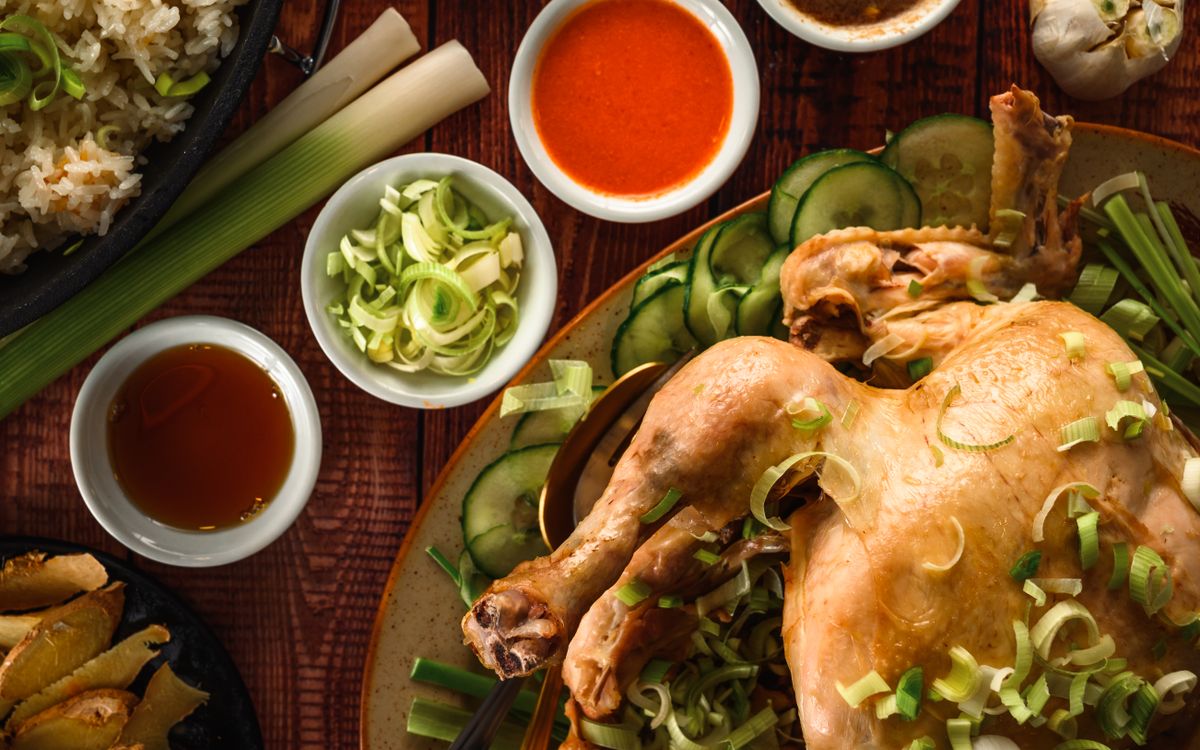
White Cut Chicken with Ginger Scallion Sauce is a 63-minute Cantonese recipe built around poach. White cut chicken with ginger scallion sauce is the accurate page for this image because the plate shows a whole pale chicken with cucumber, scallions or leeks, dipping sauces, and rice nearby, not a chopped Hunan chili stir-fry. The useful lesson is restraint: poach gently, rest the bird, season the sauce boldly, and let the clean chicken flavor stay visible.
The useful move is to treat the recipe as a sequence of cues instead of a race through the clock. Start by watching for chicken skin stays pale, smooth, and lightly glossy; later, check that poaching liquid never boils hard enough to tear the skin. That keeps the dish controlled on a home stove even when your pan, burner, or ingredient sizes differ.
This version is especially useful for family dinner, make ahead, and restaurant style. The ingredient focus is chicken, ginger, greens, and cucumber, with Light Soy Sauce, Shaoxing Wine, and Chili Oil doing most of the seasoning work.
Before cooking, read the method once and decide where your attention is needed. In White Cut Chicken with Ginger Scallion Sauce, the important path is poach, so the cook should prepare the ingredients, keep the pan setup simple, and avoid hunting for seasonings after heat has started.
The time estimate is useful, but it is not the final authority. If chicken skin stays pale, smooth, and lightly glossy takes longer than expected, stay with that cue before moving forward. If poaching liquid never boils hard enough to tear the skin happens quickly, lower the heat or move to the next step instead of waiting for an exact minute count.
The recipe is written for family dinner, make ahead, and restaurant style, which means the best version is not always the most elaborate version. Keep the pantry anchor clear, use Light Soy Sauce, Shaoxing Wine, and Chili Oil with restraint, and let the final texture tell you whether the dish needs more heat, more liquid, or a shorter finish.
Use the related pantry and technique links when you want to change the recipe. Those pages explain the role of chicken, ginger, greens, and cucumber and Gentle Steaming, so substitutions stay connected to flavor, texture, and safety instead of becoming random swaps.
If you are cooking from a small kitchen, keep the workspace calm. Put cut ingredients in order, clear a landing spot for the finished dish, and read the safety note before handling leftovers. That preparation makes the recipe easier to follow and gives the page enough context to help readers who are still deciding whether this dish fits their night.
Best for
Family dinner, make ahead, and restaurant style cooks who want a clear Cantonese dish without guessing at doneness.
Main cue
Chicken skin stays pale, smooth, and lightly glossy
Pantry anchor
Light Soy Sauce, Shaoxing Wine, and Chili Oil
Cook's notes
What changes the result
Lead with the visual correction and the core technical promise: clean poached chicken depends on gentle water and a strong sauce, not on browning or chile heat.
Judgement call
The dish is right when the skin looks smooth, the meat slices cleanly, and the ginger scallion sauce tastes slightly too salty on its own. If the sauce tastes mild by itself, it will disappear against plain chicken.
Common failure points
- The skin tears because the pot boiled too hard after the chicken went in.
- The meat tastes bland because the ginger scallion sauce was under-salted or made without hot oil.
- The chicken looks dry because it was chopped immediately after cooking without a rest.
- The plate feels like two dishes because chili sauce was poured over the chicken instead of served separately.
Flavor adjustment
- For a Cantonese banquet feel, keep the chicken pale and serve ginger scallion sauce on the side.
- For a Hong Kong cafe-style plate, add rice and cucumber and let diners spoon sauce over each bite.
- For extra aroma, pour hot oil over minced ginger and scallion just before serving.
- For a lighter version, reduce oil in the sauce but keep enough salt and ginger to season the meat.
Regional context
Bai qie ji is strongly associated with Cantonese cooking and southern Chinese banquet tables. Its appeal comes from clean poultry flavor and texture, so the page should not force a Hunan stir-fry identity onto the image.
Ingredients
What goes in
Read the ingredient list once before heating the pan. Measure the pantry items first, group the fresh ingredients by when they enter the recipe, and keep the thickener or finishing seasoning close to the stove so the final step does not stall.
- 1 small whole chicken or 3 lb bone-in chicken pieces
- 4 scallions, divided
- 6 slices fresh ginger, plus 2 tbsp minced ginger for sauce
- 1 tbsp Shaoxing wine
- 1 1/2 tsp kosher salt, divided
- 1 tsp toasted sesame oil for the skin
- 1/4 cup neutral oil
- 1 tbsp light soy sauce
- 1/4 tsp sugar
- Thin cucumber slices for serving
- Optional red chile sauce or chili oil at the table
Watch for
- chicken skin stays pale, smooth, and lightly glossy
- poaching liquid never boils hard enough to tear the skin
- ginger scallion sauce sizzles when hot oil hits the bowl
- meat juices run clear and the thickest part is safely cooked
- the finished plate tastes clean, gingery, salty, and not spicy by default
Ingredient notes
Know the pantry before you cook
The pantry backbone for this recipe is Light Soy Sauce, Shaoxing Wine, and Chili Oil. These notes explain what each linked ingredient is doing before you start swapping or shopping.
Light Soy Sauce
The everyday salty soy sauce used for seasoning, not the same as dark soy sauce.
Tamari can work when a recipe needs a gluten-free-adaptable path, but labels must be checked.
Shaoxing Wine
A Chinese rice wine used to reduce raw aromas and add gentle complexity.
Dry sherry is a common substitute. For alcohol-free cooking, use stock plus a small aromatic boost.
Chili Oil
A fragrant oil that carries chili heat, toasted spice, and color into noodles, cold dishes, and dumpling sauces.
Use neutral oil bloomed with chili flakes and a pinch of sugar when a jar is unavailable.
Method
Cook to the cues
The method starts with start with a fragrant poaching pot and ends with serve clean and sauced. Use the checklist to keep your place, but let the visible cues decide when to move on: chicken skin stays pale, smooth, and lightly glossy, poaching liquid never boils hard enough to tear the skin, and ginger scallion sauce sizzles when hot oil hits the bowl.
Cook along
Check off steps as you cook
Start with a fragrant poaching pot
Bring enough water to cover the chicken to a simmer with scallions, ginger slices, Shaoxing wine, and salt. Keep the pot at a gentle bubble instead of a rolling boil.
Poach without rough boiling
Lower in the chicken and let the heat return slowly. Simmer gently, then turn down as needed so the skin stays smooth and the meat cooks evenly.
Rest before chopping
Move the chicken to a tray and rest until the juices settle. Brush the skin lightly with sesame oil so it looks glossy and does not dry out.
Make the ginger scallion sauce
Stir minced ginger, sliced scallion, salt, soy sauce, and sugar in a heatproof bowl. Pour hot oil over the aromatics so they sizzle and lose their raw edge.
Serve clean and sauced
Chop the chicken into pieces or slice boneless portions, then serve with cucumber, leek or scallion garnish, rice, and sauce on the side.
Substitutions and safety
Before you improvise
Use the substitutions as controlled changes rather than random swaps. Keep the same cooking method, keep the sauce balance close, and use the safety notes when changing protein, reheating leftovers, or holding the dish for later.
Substitutions
- Use bone-in chicken legs if a whole chicken feels inconvenient; the plate will still match the same poached texture.
- Use scallion greens if leeks are unavailable, because the garnish should read fresh and oniony rather than sweet.
- Serve chili oil separately for diners who want heat, but do not turn the chicken itself into a chili stir-fry.
- If you need to cook ahead, poach and chill the chicken, then bring it close to room temperature before serving.
Safety notes
- Cook chicken to a safe internal temperature, especially near the thigh joint or bone.
- Do not leave poached chicken at room temperature for long service windows.
- Use a stable board and a heavy knife if chopping bone-in pieces.
Serving and storage
Finish the meal well
Serve White Cut Chicken with Ginger Scallion Sauce while the finished plate tastes clean, gingery, salty, and not spicy by default. If you are cooking ahead, cool leftovers quickly, keep the sauce or cooking liquid with the main ingredients, and reheat gently so the texture stays close to the first serving.
FAQ
Common questions
Why is this no longer Hunan chili chicken stir-fry?
The reviewed image shows a pale whole chicken with cucumber, scallions or leeks, sauces, and rice. It does not show chopped chicken stir-fried with Hunan chiles.
How do I keep white cut chicken tender?
Keep the poaching liquid gentle, rest the chicken before chopping, and avoid boiling the skin hard. The sauce should carry most of the salt and aroma.
Can I make white cut chicken ahead?
Yes. Poach, cool, and refrigerate the chicken, then serve it chilled or near room temperature with freshly mixed ginger scallion sauce.
Is white cut chicken supposed to be spicy?
No. The classic profile is clean chicken with salty ginger scallion sauce. Chili oil or red chile sauce can sit on the side, as in many restaurant spreads.