northern recipe
Jiucai Hezi, Chinese Chive Egg Pockets
Make a soft hot-water dough, mix cooled scrambled egg with dried garlic chives and optional glass noodles, seal the pockets thin, then pan-fry until both sides are blistered and crisp.
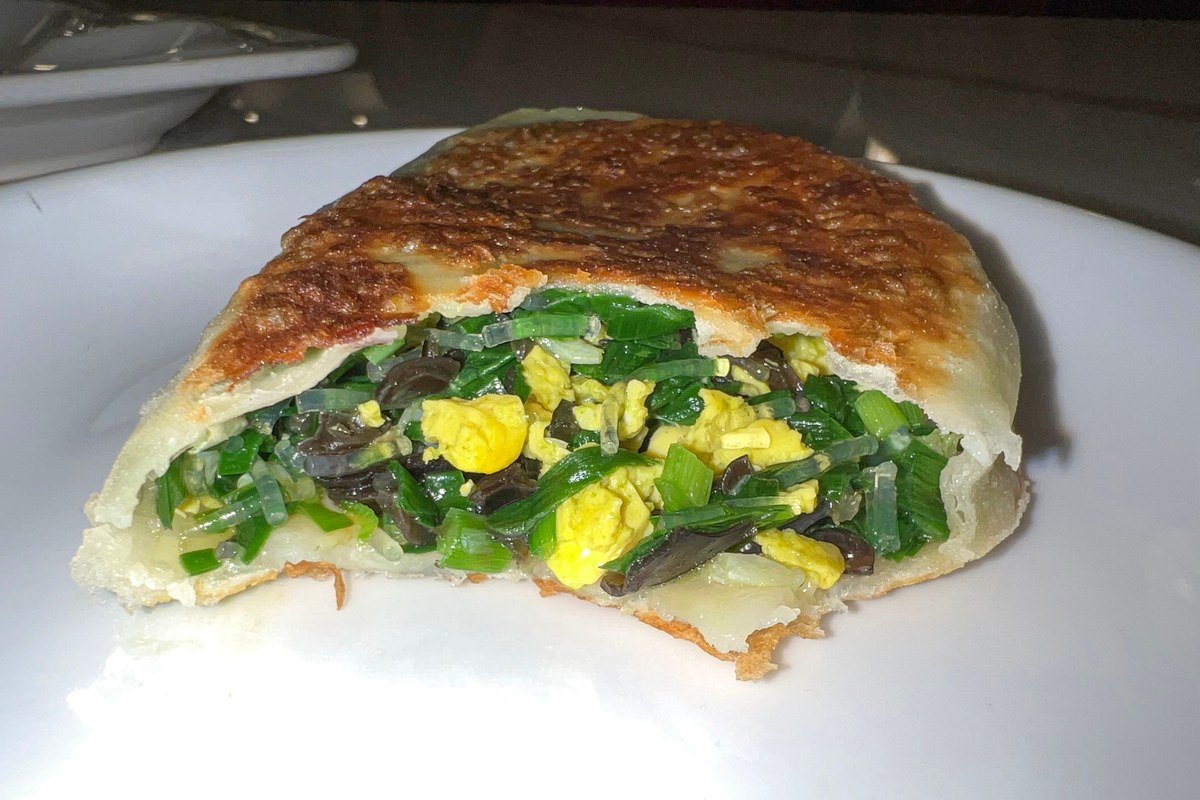
Overview
Why this recipe works
Jiucai Hezi is a 47-minute Northern Chinese recipe built around pan fry. Jiucai Hezi is a northern Chinese chive pocket, not a generic leek pancake. The filling needs to stay dry and loose, the eggs need to cool before they meet the chives, and the wrapper should blister in the skillet without steaming itself soggy.
The useful move is to treat the recipe as a sequence of cues instead of a race through the clock. Start by watching for dough feels soft but not sticky after resting; later, check that egg curds are cool before they touch the chives. That keeps the dish controlled on a home stove even when your pan, burner, or ingredient sizes differ.
This version is especially useful for vegetarian and project. The ingredient focus is egg, dumpling, pancake, and greens, with Light Soy Sauce, Chinkiang Vinegar, and Cumin doing most of the seasoning work.
Before cooking, read the method once and decide where your attention is needed. In Jiucai Hezi, the important path is pan fry, so the cook should prepare the ingredients, keep the pan setup simple, and avoid hunting for seasonings after heat has started.
The time estimate is useful, but it is not the final authority. If dough feels soft but not sticky after resting takes longer than expected, stay with that cue before moving forward. If egg curds are cool before they touch the chives happens quickly, lower the heat or move to the next step instead of waiting for an exact minute count.
The recipe is written for vegetarian and project, which means the best version is not always the most elaborate version. Keep the pantry anchor clear, use Light Soy Sauce, Chinkiang Vinegar, and Cumin with restraint, and let the final texture tell you whether the dish needs more heat, more liquid, or a shorter finish.
Use the related pantry and technique links when you want to change the recipe. Those pages explain the role of egg, dumpling, pancake, and greens and Pan-Fry Dumplings and Pancakes, so substitutions stay connected to flavor, texture, and safety instead of becoming random swaps.
If you are cooking from a small kitchen, keep the workspace calm. Put cut ingredients in order, clear a landing spot for the finished dish, and read the safety note before handling leftovers. That preparation makes the recipe easier to follow and gives the page enough context to help readers who are still deciding whether this dish fits their night.
Best for
Vegetarian and project cooks who want a clear Northern Chinese dish without guessing at doneness.
Main cue
Dough feels soft but not sticky after resting
Pantry anchor
Light Soy Sauce, Chinkiang Vinegar, and Cumin
Cook's notes
What changes the result
The opening should immediately correct the main failure: wet chives and hot eggs make the pocket leak before the wrapper can crisp.
Judgement call
Before sealing, lift a spoonful of filling and tilt it over the bowl. If liquid gathers at the edge, pause and drain or add chopped glass noodles; if it stays loose and fluffy, wrap immediately.
Common failure points
- The pockets leak because chopped chives were wet or salted too early.
- The filling tastes flat because the eggs were browned hard instead of kept soft and sweet.
- The seam splits because the dough was rolled too thick in the center and stretched at the edge.
- The wrapper turns leathery because the pan was too cool and the pocket steamed before browning.
Flavor adjustment
- For a very northern home-style pocket, keep the filling simple with garlic chives, egg, sesame oil, and glass noodles.
- For more chew, add chopped soaked glass noodles; for more fragrance, add a small amount of wood ear.
- For a non-vegetarian version, a spoonful of dried shrimp adds briny depth, but it should be declared clearly.
- For a breakfast-style plate, make the pockets smaller and thinner so they crisp quickly without a heavy dough bite.
Regional context
Jiucai hezi is closely associated with northern Chinese wheat cooking, with Shandong often named in English reference material. It belongs beside dumplings, scallion pancakes, and other pan-fried filled doughs rather than beside simple vegetable omelets.
Ingredients
What goes in
Read the ingredient list once before heating the pan. Measure the pantry items first, group the fresh ingredients by when they enter the recipe, and keep the thickener or finishing seasoning close to the stove so the final step does not stall.
- 2 cups all-purpose flour
- 1/2 cup boiling water, plus 1/3 cup room-temperature water as needed
- 3 large eggs, softly scrambled and cooled
- 2 1/2 cups Chinese garlic chives, washed, dried, and chopped short
- 1/2 cup soaked glass noodles, chopped, optional
- 1 tbsp toasted sesame oil
- 1 tbsp neutral oil, plus more for pan-frying
- 1 tsp light soy sauce or 1/2 tsp fine salt
- 1/4 tsp ground white pepper
- Flour for dusting
Watch for
- dough feels soft but not sticky after resting
- egg curds are cool before they touch the chives
- filling looks loose and dry, not wet in the bowl
- sealed pockets lie mostly flat in the pan
- wrapper has small golden blisters before serving
Ingredient notes
Know the pantry before you cook
The pantry backbone for this recipe is Light Soy Sauce, Chinkiang Vinegar, and Cumin. These notes explain what each linked ingredient is doing before you start swapping or shopping.
Light Soy Sauce
The everyday salty soy sauce used for seasoning, not the same as dark soy sauce.
Tamari can work when a recipe needs a gluten-free-adaptable path, but labels must be checked.
Chinkiang Vinegar
A dark rice vinegar with malt-like depth, used in dressings, dipping sauces, and sweet-sour balances.
Rice vinegar is lighter. Add a small amount of soy sauce to approximate the darker savory note.
Cumin
An earthy spice used in Xinjiang-style lamb, noodles, and dry stir-fries.
Toast ground cumin briefly in oil if seeds are unavailable.
Chili Oil
A fragrant oil that carries chili heat, toasted spice, and color into noodles, cold dishes, and dumpling sauces.
Use neutral oil bloomed with chili flakes and a pinch of sugar when a jar is unavailable.
Method
Cook to the cues
The method starts with make a soft hot-water dough and ends with pan-fry, cover briefly, then crisp. Use the checklist to keep your place, but let the visible cues decide when to move on: dough feels soft but not sticky after resting, egg curds are cool before they touch the chives, and filling looks loose and dry, not wet in the bowl.
Cook along
Check off steps as you cook
Make a soft hot-water dough
Pour boiling water into the flour while stirring, then add room-temperature water little by little until a shaggy dough forms. Knead until smooth, cover, and rest for at least 30 minutes so the wrappers roll thin without shrinking.
Cool the eggs before mixing
Scramble the eggs softly in a little oil, breaking them into small curds. Spread them on a plate to cool fully; hot egg will wilt the chives and draw water into the filling.
Keep the chive filling dry
Pat the garlic chives dry, then mix them with cooled egg, glass noodles if using, sesame oil, soy sauce or salt, and white pepper. Season late and gently so the chives do not leak.
Seal thin half-moon pockets
Divide the dough into small balls, roll each into a thin round, add a shallow layer of filling, and press the seam tightly. Do not overfill; a flat pocket fries more evenly than a bulging one.
Pan-fry, cover briefly, then crisp
Fry the pockets in a lightly oiled skillet over medium heat. Cover for a short minute only if the wrapper needs help cooking through, then uncover and fry until both sides are golden, blistered, and crisp.
Substitutions and safety
Before you improvise
Use the substitutions as controlled changes rather than random swaps. Keep the same cooking method, keep the sauce balance close, and use the safety notes when changing protein, reheating leftovers, or holding the dish for later.
Substitutions
- Use Chinese garlic chives if possible; scallions or Western leeks are usable but give a sweeter, less garlicky pocket.
- Omit dried shrimp to keep the filling vegetarian; glass noodles and wood ear can add body without seafood.
- Use store-bought dumpling wrappers only for a shortcut version, knowing they will be smaller and less bread-like.
- Add a little five-spice or chili oil only after you understand the basic filling, because garlic chives are already assertive.
Safety notes
- Wash garlic chives well, then dry them thoroughly so dirt and rinse water do not enter the filling.
- Cook eggs until set and cool them quickly on a plate before mixing.
- Refrigerate leftover cooked pockets within 2 hours and re-crisp them in a skillet rather than microwaving if texture matters.
Serving and storage
Finish the meal well
Serve Jiucai Hezi while wrapper has small golden blisters before serving. If you are cooking ahead, cool leftovers quickly, keep the sauce or cooking liquid with the main ingredients, and reheat gently so the texture stays close to the first serving.
FAQ
Common questions
What is Jiucai Hezi?
Jiucai Hezi are Chinese chive egg pockets: thin flour wrappers filled with garlic chives, scrambled egg, and often glass noodles or dried shrimp, then pan-fried or baked until crisp.
Can I use regular leeks instead of garlic chives?
You can, but the result is not the same. Garlic chives are thinner, greener, and more pungent, while leeks are wetter and sweeter, so they need extra drying and a lighter hand with filling.
Why did my chive pockets leak?
The filling was too wet, the eggs were still hot, or the pockets were overfilled. Dry the chives, cool the eggs, season late, and keep the filling layer shallow.
Are Jiucai Hezi vegetarian?
This version is vegetarian because it uses egg, garlic chives, and glass noodles. Some traditional or restaurant versions include dried shrimp, so check the filling if you are not cooking them yourself.